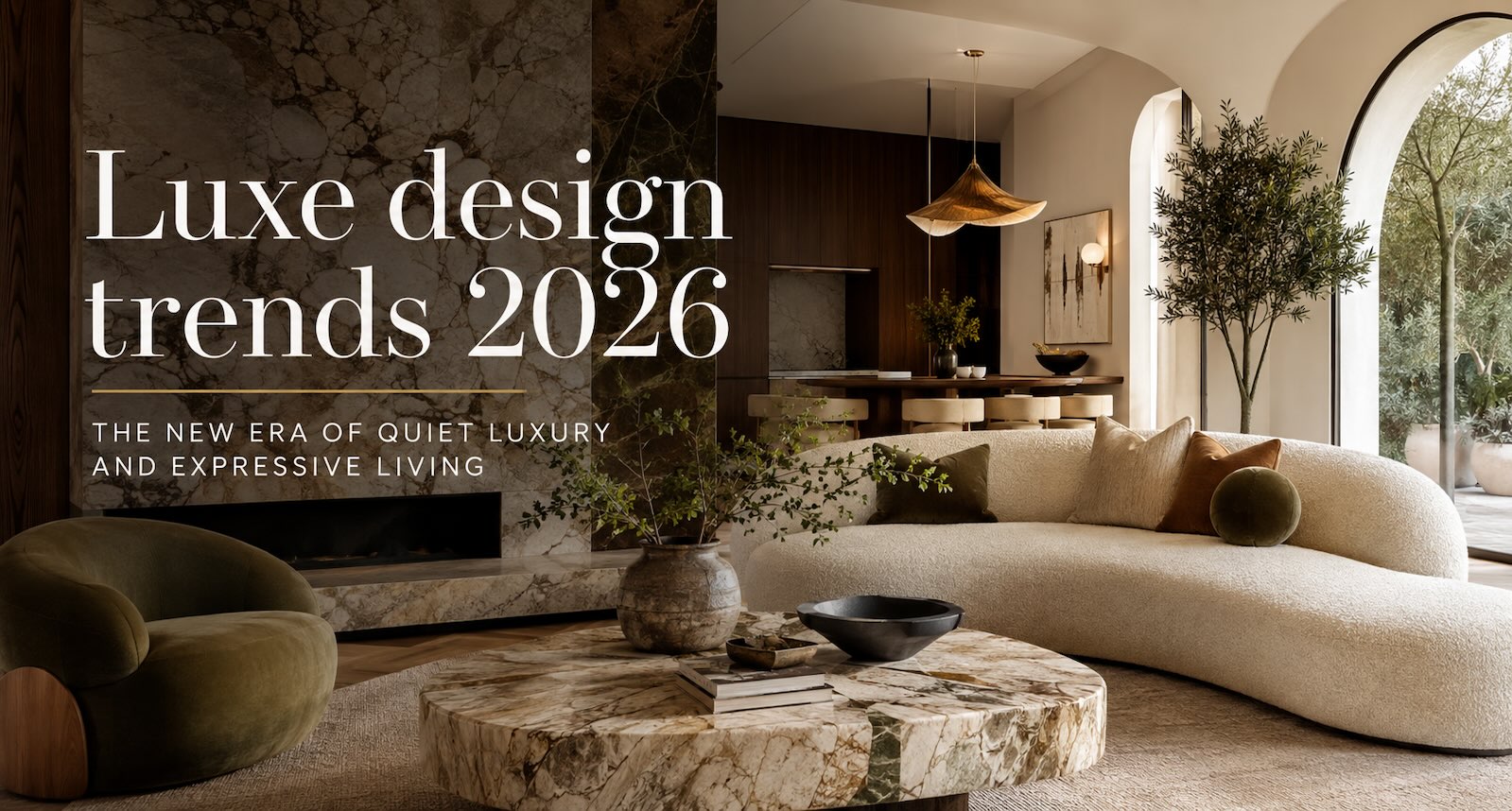
Luxury interior design in 2026 is becoming more personal, layered and enduring. Instead of filling homes with expensive statement pieces simply to impress, homeowners and designers are investing in craftsmanship, natural materials and spaces that reflect individual lifestyles.
The result is a move away from minimalism for the sake of minimalism and towards interiors that feel collected, comfortable and timeless. Rich textures, sculptural furniture and artisan finishes are replacing mass-produced décor, while sustainability continues to influence purchasing decisions at the luxury end of the market.
Here are the defining luxury interior design trends shaping homes throughout 2026.
1. Warm natural stone becomes the hero
Cold white marble is making room for warmer, more characterful stones. Designers are embracing dramatic veining and earthy colours that create warmth rather than stark elegance.
Popular choices include:
- Travertine
- Taj Mahal quartzite
- Calacatta Viola marble
- Rosso Levanto marble
- Breccia stone
- Limestone
These materials are appearing on kitchen islands, bathrooms, dining tables, fireplaces, shelving and even furniture.
Why it’s trending
Natural stone instantly adds permanence and authenticity to a home. Every slab is unique, making each installation one of a kind while providing durability that can last for decades.
2. Curved architecture softens every room
Sharp corners are gradually disappearing in favour of flowing architectural lines.
Expect to see:
- Rounded walls
- Arched doorways
- Curved cabinetry
- Sculptural ceilings
- Organic-shaped mirrors
- Circular sofas
Rather than making rooms feel formal, curves create a calm and inviting atmosphere.
Why it’s trending
People increasingly want homes that feel relaxing after spending much of the day surrounded by technology and straight-edged digital interfaces. Curves introduce softness and visual comfort.
3. Rich wood tones replace pale timber
After years dominated by Scandinavian-inspired oak, darker timbers are returning in a sophisticated way.
Popular species include:
- Walnut
- Smoked oak
- American cherry
- Dark ash
- Mahogany-inspired finishes
These woods appear in cabinetry, wall panelling, furniture and flooring.
Why it’s trending
Deeper timber colours add warmth, richness and a sense of heritage while pairing beautifully with natural stone and brass accents.
4. Layered lighting becomes essential
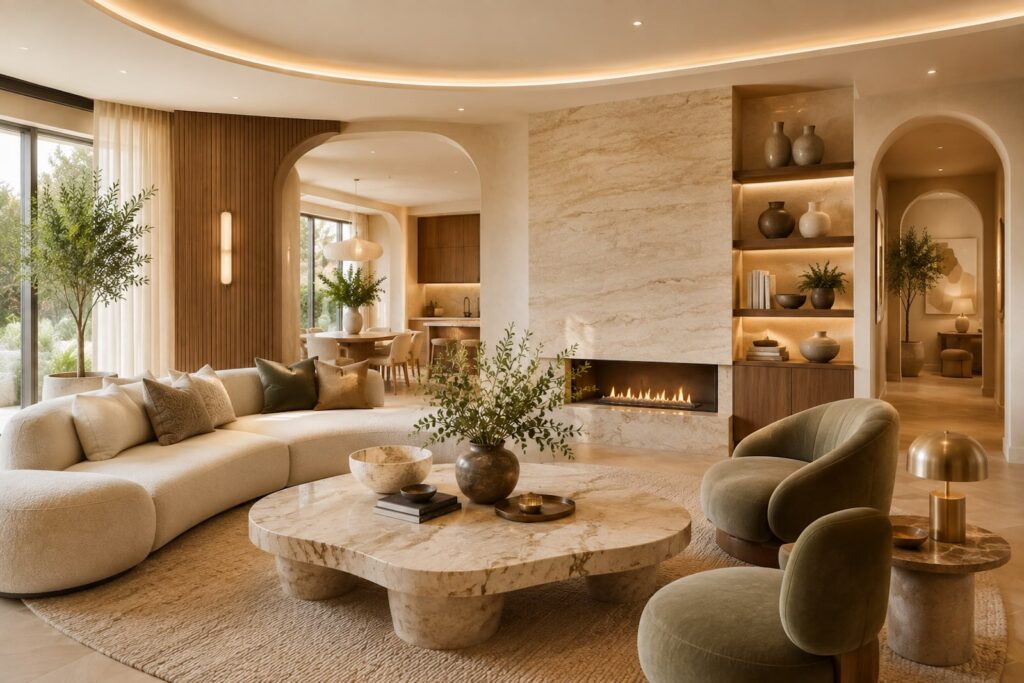
Luxury homes in 2026 rarely rely on a single ceiling light.
Instead, designers combine:
- Statement pendants
- Wall sconces
- Floor lamps
- Integrated LED shelving
- Cove lighting
- Picture lighting
- Decorative table lamps
Lighting becomes an architectural feature rather than simply a practical necessity.
Why it’s trending
Layered lighting creates mood throughout the day and allows homeowners to completely transform a room from morning to evening.
5. Artisan craftsmanship takes centre stage
Handmade products continue to replace mass-produced décor.
Luxury interiors now feature:
- Handmade ceramics
- Handwoven rugs
- Bespoke furniture
- Hand-plastered walls
- Custom cabinetry
- Artisan glass lighting
- Sculptural timber pieces
Why it’s trending
Homeowners increasingly value originality. Handmade pieces carry subtle imperfections that give a room warmth and authenticity.
6. Textured walls create depth
Flat painted walls are giving way to tactile finishes.
Popular treatments include:
- Limewash
- Venetian plaster
- Roman clay
- Textured render
- Timber panelling
- Fabric wall coverings
These finishes catch natural light differently throughout the day, creating constantly changing visual interest.
Why it’s trending
Texture adds luxury without relying on excessive decoration and creates an understated sophistication.
7. Wellness spaces become everyday luxuries
Luxury is increasingly measured by how a home supports health and wellbeing.
Designers are creating:
- Home spas
- Sauna rooms
- Meditation spaces
- Yoga studios
- Cold plunge areas
- Reading rooms
- Indoor gardens
Even smaller homes are incorporating wellness corners.
Why it’s trending
Health-conscious living has become a long-term lifestyle shift rather than a passing trend.
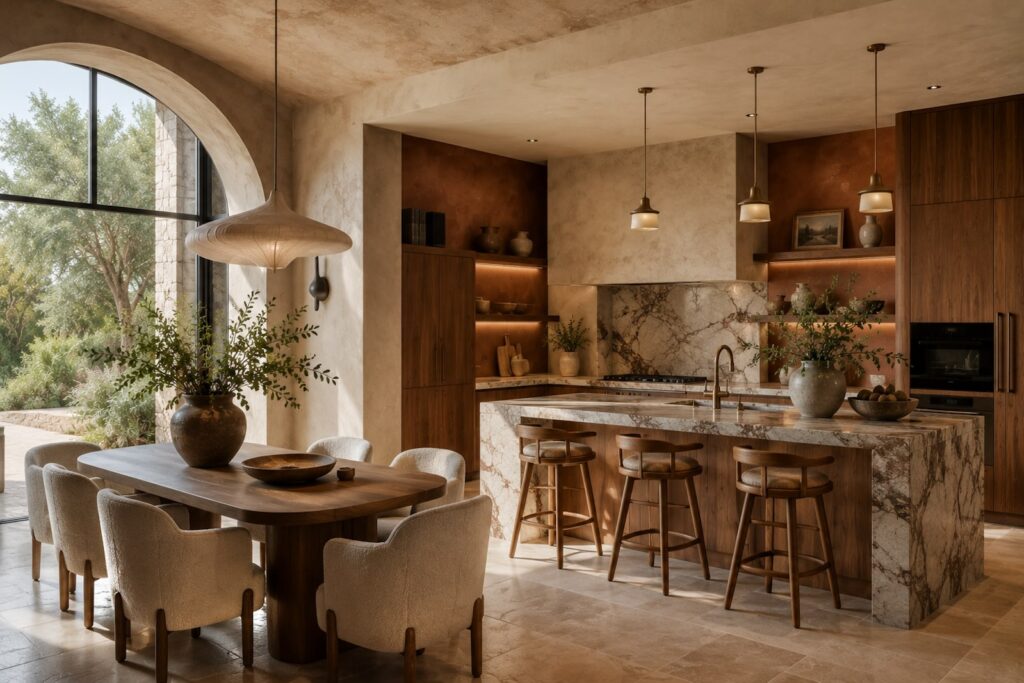
8. Bold natural colours replace grey
The dominance of cool greys continues to fade.
Luxury colour palettes now embrace:
- Olive green
- Terracotta
- Deep burgundy
- Chocolate brown
- Ochre
- Burnt sienna
- Forest green
- Soft clay
These colours appear across upholstery, cabinetry, walls and accessories.
Why it’s trending
Earth-inspired colours feel timeless and connect interiors with the natural world.
9. Statement stone furniture grows in popularity
Natural stone is no longer confined to kitchens and bathrooms.
Designers are incorporating stone into:
- Coffee tables
- Console tables
- Dining tables
- Side tables
- Benches
- Plinths
Large sculptural stone pieces often become the focal point of a room.
Why it’s trending
Stone furniture delivers permanence, craftsmanship and visual impact while remaining highly functional.
10. Quiet luxury continues to evolve
Quiet luxury remains influential but has matured beyond neutral colour palettes.
Today’s quiet luxury focuses on:
- Exceptional craftsmanship
- Premium materials
- Timeless design
- Comfort
- Longevity
- Quality over quantity
Rather than displaying wealth through logos or excessive decoration, luxury is expressed through thoughtful design choices.
Why it’s trending
Consumers increasingly prefer investment pieces that remain stylish for many years instead of following fast-moving trends.
11. Vintage and collectible furniture gains value
One-of-a-kind furniture continues to define premium interiors.
Designers are sourcing:
- Mid-century modern pieces
- Italian design classics
- Art Deco furniture
- Vintage lighting
- Antique cabinets
- Collectable ceramics
Mixing contemporary interiors with vintage items creates a curated appearance.
Why it’s trending
Vintage furniture introduces character while supporting sustainable design by extending the life of beautifully crafted pieces.
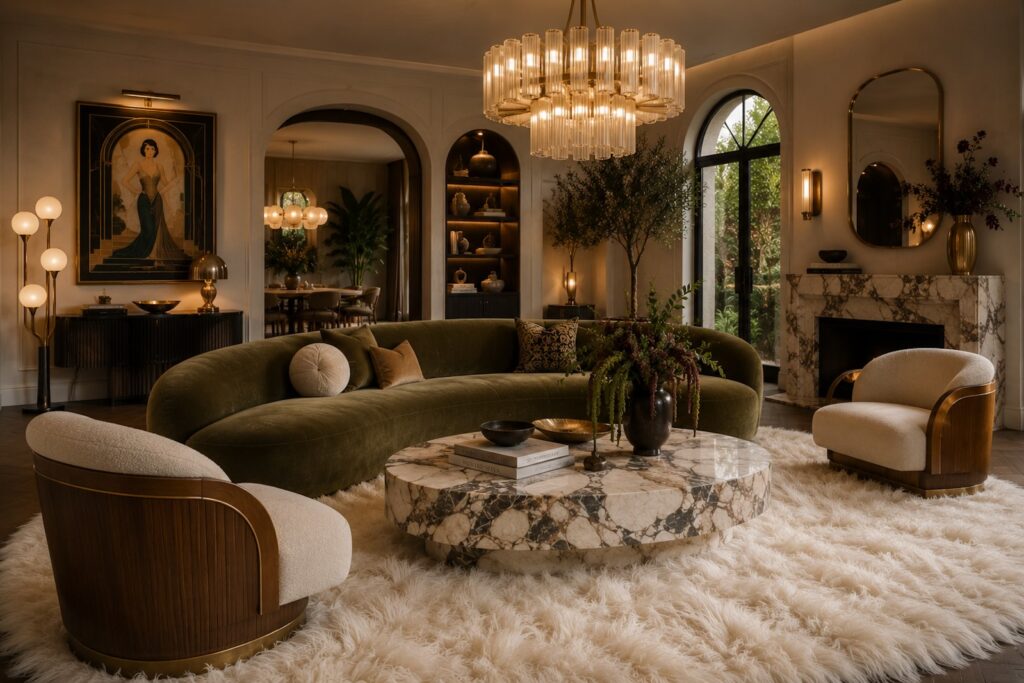
12. Sculptural furniture becomes functional art
Furniture is increasingly viewed as artwork.
Trending pieces include:
- Curved sofas
- Organic dining chairs
- Monolithic coffee tables
- Sculptural armchairs
- Artistic consoles
- Statement lighting
Many designs blur the line between furniture and sculpture.
Why it’s trending
As homes become more personalised, homeowners want standout pieces that reflect their taste while remaining practical.
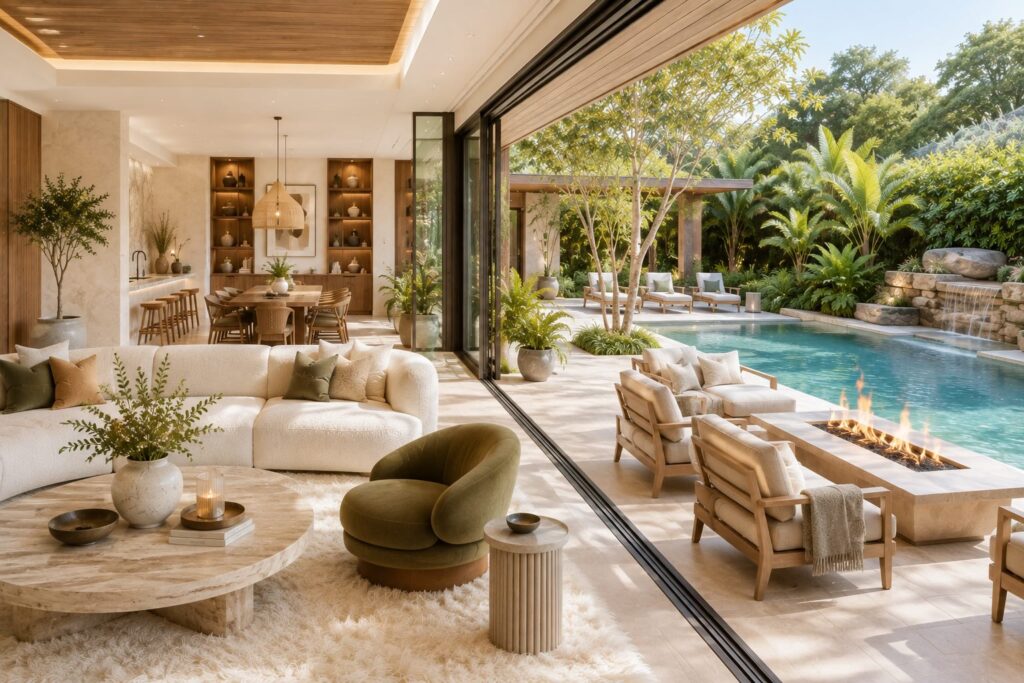
13. Indoor-outdoor luxury reaches new heights
Outdoor living spaces continue to rival interior rooms.
Luxury outdoor features include:
- Outdoor kitchens
- Designer dining settings
- Fire pits
- Resort-style pools
- Architectural landscaping
- Retractable glass walls
- Premium outdoor lounges
The transition between inside and outside is becoming increasingly seamless.
Why it’s trending
People want homes that maximise usable living space while strengthening their connection with nature.
14. Sustainable luxury becomes the standard
Environmental responsibility is no longer separate from luxury.
Premium brands are focusing on:
- Responsibly sourced timber
- Recycled materials
- Natural fibres
- Energy-efficient lighting
- Low-VOC finishes
- Furniture designed to last decades
Luxury increasingly means buying fewer, better-quality products.
Why it’s trending
High-end consumers are prioritising craftsmanship, durability and ethical sourcing alongside aesthetics.
15. Personalisation replaces showroom styling
Perhaps the biggest luxury trend for 2026 is individuality.
Homes increasingly reflect the owner’s personality through:
- Curated art collections
- Travel souvenirs
- Bespoke furniture
- Family heirlooms
- Unique colour combinations
- Custom joinery
Rather than copying social media trends exactly, homeowners are creating spaces with genuine meaning.
Why it’s trending
People are moving away from homes that look like furniture catalogues and towards interiors that tell their own story.
The future of luxury interiors
Luxury interior design in 2026 is less about excess and more about intention. The most desirable homes prioritise exceptional materials, artisan craftsmanship, layered textures and timeless design over short-lived trends.
Natural stone, rich timber, sculptural furniture, wellness-focused spaces and thoughtfully curated vintage pieces are shaping interiors that feel both sophisticated and deeply personal. Rather than chasing fashion, today’s luxury homes are designed to age beautifully, becoming more characterful with time.
The result is a style of luxury that is quieter, warmer and more enduring, where comfort, authenticity and quality take precedence over display.