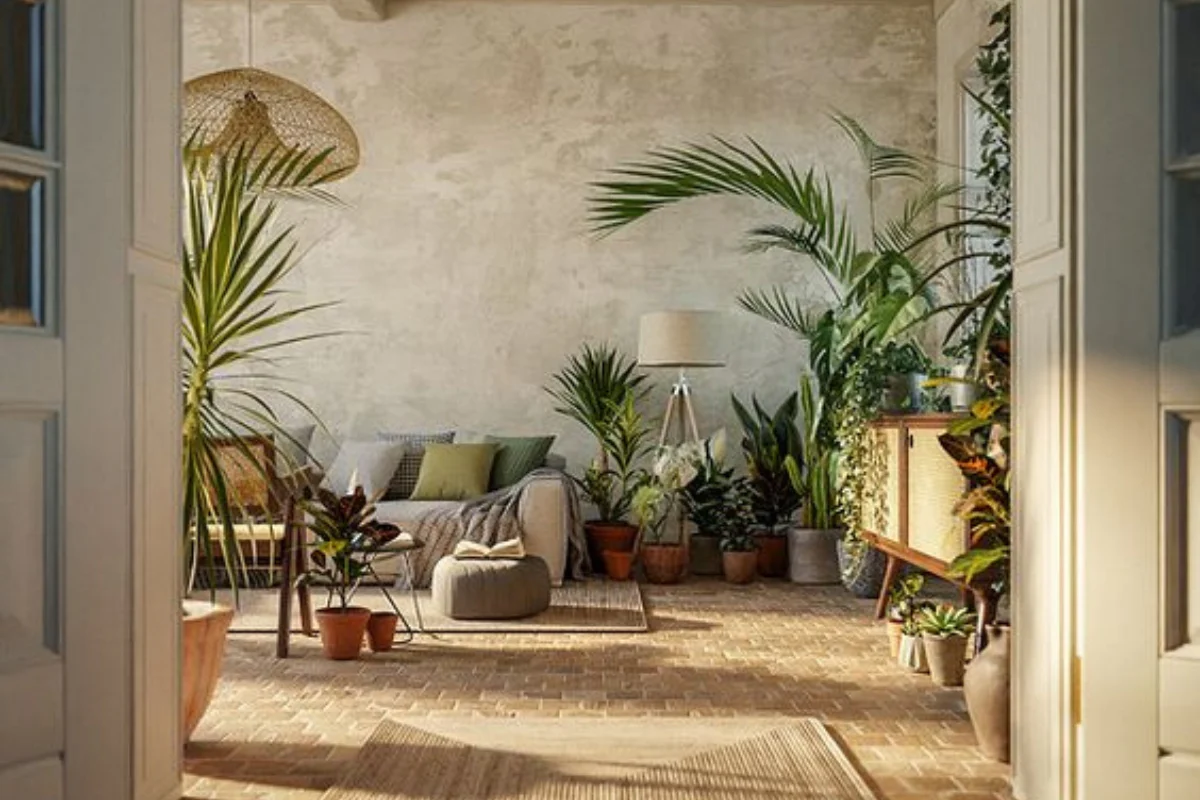
Biophilic interior design aims to bring the outdoors inside. It takes inspiration from plants and organic, natural materials to create calm, grounded spaces. Think Japandi but with a greener, natural, even more organic vibe.
This design style reflects a growing trend of getting back to and reconnecting to nature.
Biophilic design is about the connection humans have for nature. This connection is essential for our psychological health and well-being.
Ancient civilisations in Greece, Japan, Rome and China designed their buildings and cities with gardens, courtyards and natural vistas into their architecture.
Famous architects Frank Lloyd Wright and Le Corbusier both brought nature into their designs. Wright’s famous Fallingwater house, is partly built over a waterfall. Le Corbusier’s vision of green cities laid the groundwork for contemporary biophilic design.
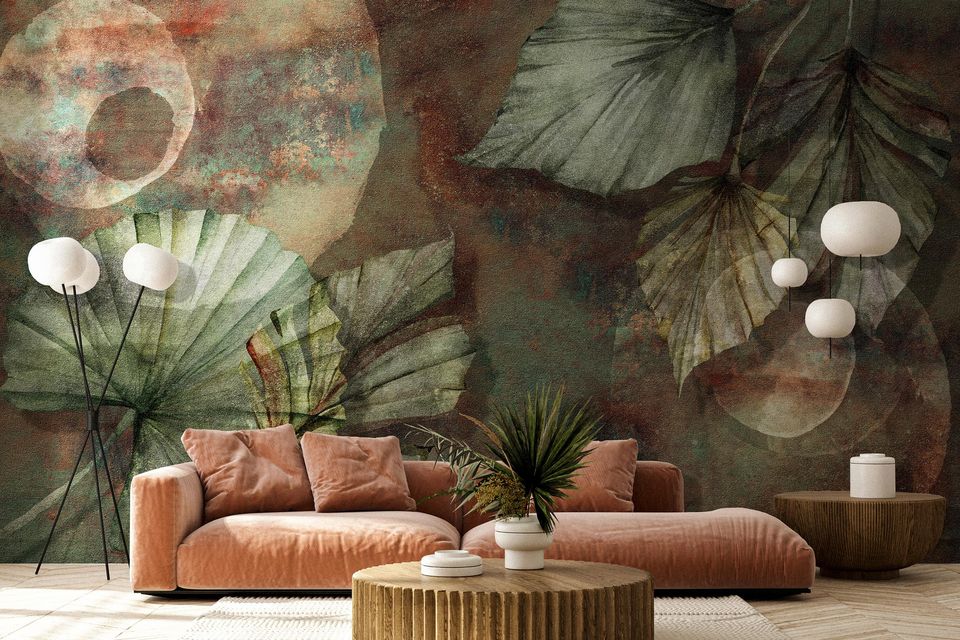
Having plants inside are good for your health. Certain plants help to purify the air, which makes them an excellent choice for improving your health. Science shows that when people are connected to and can see nature in their surroundings, it decreases blood pressure and heart rate. Even wallpaper with flowers or plants has some of the benefits of actual plants.
Biophilic design features
Biophilic design is akin to sustainable design. Some of the features of biophilic design are:
- natural light
- organic shapes
- natural elements
- patterns found in nature
- overflowing greenery
- green walls
- views of nature
- natural materials
- eco-conscious design
- indoor plants
- natural scents
- indoor edible garden

Incorporating biophilic design in your interiors
There are many ways you can incorporate nature and organic materials into your living spaces.
Highlight outdoor views
Bring the indoors inside with open windows that face greenery.
If you don’t have nice views outside your windows, then add some faux or real greenery. For example, if your kitchen window faces a wall, add some faux green flowers, layered to create a beautiful view. If you have the space and ability, add a tall trellis up the wall and plant evergreen plants that do not die off in winter. This way you will always see green outside your window (not dreary bricks) and that is wonderful to see.

Decorate with natural elements
Fill your home with natural materials that are eco-inspired and organic. Add a wood panelled wall with reclaimed wood. Have inserts in the wall that allow plants to be added in there. Add real wood/rattan or marble planters with indoor plants into your spaces. Group a few planters together to create a cluster of beautiful greenery. Put the larger pots and plants at the back and stagger the other ones for an organic semi-circle arrangement.
Use spot lighting, natural floor lights or natural light to help feature these green spaces. This will make your home feel comfortable and happy. And there’s the added benefit of the plants detoxifying your air.

Bring plants inside
One of the easiest ways to bring biophilic design into your home is with real plants. Start small, especially if you’re not used to indoor plants. There are many low maintenance plants you can choose, such as aloe vera or other succulents. They help to detox the environment and look really pretty. You can put a few pots with different succulents (or aloe vera) in different spaces of your home. If you’re a more experienced gardener, why not try a living plant wall near your kitchen, staircase or balcony, with herbs. If you have the space, why not line the wall with greenery to bring life to your spaces.
If you have any pets, make sure the indoor plants you choose are not toxic to your pets.

Incorporate patterns found in nature
Biophilic patterns are scientifically proven to decrease stress and enhance wellbeing.
Tactile materials such as marble are great as they are cold and feel nice to touch. Marble is such a nice material that can be used in any room. It can be used on kitchen bench, vanities, bases of floor lamps, table-tops. It’s very versatile and works well with the greenery around it.
Plant and/or flower patterns such as those found on wallpaper are practical ways to introduce nature into your home. Use patterned wallpaper sparingly, on a feature wall or above dado rail to really feature the design and make the area pop.

Connect the outdoors to the indoors
Creating an open flow between the indoors and outdoors is part of biophilic design.
Consider sliding, concertina or stacked glass doors from your living areas to the outdoor areas.
Open your windows, open those blinds and curtains, to let nature inside. Fresh air from outside really helps to make your home feel happy. You can hear the birds and other outdoor sounds. Letting the sunshine in helps to boost your mood.