


Maximalist interior design is a celebration of individuality, creativity, and bold expression. It’s about embracing the philosophy that more is more, layering colours, textures, and patterns to create spaces that are as dynamic as they are inviting. If you’re looking to infuse your living area with personality and flair, here are eight maximalist inspirations to spark your imagination.
Transform your living room into a bohemian paradise by mixing vintage furniture with vibrant textiles
Eclectic bohemian haven

Transform your living room into a bohemian paradise by mixing vintage furniture with vibrant textiles. Think plush velvet sofas adorned with an array of patterned throw pillows, layered rugs in rich hues, and an abundance of houseplants. Incorporate eclectic lighting fixtures, such as Moroccan lanterns or beaded chandeliers, to add warmth and character. This style thrives on curated chaos, where every item tells a story and contributes to the room’s unique charm.
To enhance the boho vibe, consider adding macramé wall hangings, woven baskets, and ethnic-inspired art pieces. Mixing different textures—like leather, wood, and metal—creates depth and interest. Don’t shy away from bold colour combinations; jewel tones like emerald green, ruby red, and sapphire blue can coexist harmoniously when layered thoughtfully.
Lighting plays a crucial role in setting the mood. Opt for warm-toned bulbs and multiple light sources to create a cozy, inviting atmosphere. A statement chandelier or a collection of pendant lights can serve as both functional and artistic focal points. Remember, in a maximalist bohemian living room, the more layers and textures, the better.
Characterised by bold geometric patterns, rich materials like lacquered wood and brass and a palette of deep blues, golds and blacks, art deco glamour exudes elegance
Art deco glamour

For those who appreciate opulence and sophistication, an Art Deco-inspired living room offers a luxurious maximalist approach. Characterised by bold geometric patterns, rich materials like lacquered wood and brass, and a palette of deep blues, golds, and blacks, this style exudes elegance. Incorporate mirrored furniture, velvet upholstery, and statement lighting fixtures to capture the essence of the Roaring Twenties.
To add a modern twist, mix in contemporary art pieces and sleek lines while maintaining the Art Deco’s signature glamour. A large, ornate mirror can serve as a focal point, reflecting light and enhancing the room’s sense of space. Layering textures such as silk curtains, shagreen accessories, and glossy finishes creates a tactile richness that invites touch and admiration.
Don’t forget the importance of lighting in this design scheme. Choose fixtures with clean lines and metallic finishes, like a gold-framed chandelier or sconces with angular designs. These elements not only illuminate the space but also contribute to the room’s overall aesthetic, ensuring that every corner radiates the glamour of the Art Deco era.
Use botanical prints, palm leaf motifs, and natural materials like rattan and bamboo to create a lush, island-inspired atmosphere
Tropical jungle retreat oasis

Bring the outdoors in by designing a tropical-inspired living room that feels like a permanent vacation. Use botanical prints, palm leaf motifs, and natural materials like rattan and bamboo to create a lush, island-inspired atmosphere. Incorporate vibrant colours such as coral, turquoise, and sunny yellow to evoke the warmth and energy of tropical locales.
Layering is key in this design style. Mix different patterns, like floral cushions with striped rugs, to add visual interest. Incorporate various textures, such as wicker furniture, linen throws, and ceramic planters, to create a tactile experience. A statement wall featuring a large-scale tropical mural or wallpaper can serve as a dramatic backdrop, setting the tone for the entire room.
Lighting should be soft and ambient, mimicking the natural light of a tropical setting. Use woven pendant lights, lantern-style fixtures, or string lights to add warmth and create a relaxed, inviting environment. By combining these elements, you can transform your living room into a vibrant tropical oasis that offers a retreat from the everyday.
Mid-century modern design is known for clean lines and functional form, but when infused with maximalist elements, it is a celebration of colour and personality
Mid-Century modern maximalism

Mid-century modern design is known for its clean lines and functional form, but when infused with maximalist elements, it becomes a celebration of colour and personality. Start with iconic furniture pieces like Eames chairs or teak sideboards, and layer them with bold textiles and vibrant art. Use a colour palette that includes mustard yellow, teal, and burnt orange to evoke the era’s spirit.
Incorporate geometric patterns through rugs, cushions, and wall art to add visual interest. Mix materials such as wood, metal, and glass to create a balanced yet dynamic space. Lighting fixtures should be statement pieces—think Sputnik chandeliers or arc floor lamps—that not only illuminate but also serve as artful elements within the room.
To prevent the space from feeling too cluttered, maintain a sense of openness by carefully curating your decor. Choose a few bold pieces that resonate with you and allow them to stand out. This approach ensures that the room feels cohesive and thoughtfully designed, embodying the essence of mid-century modern maximalism.
Global eclectic mix maximalist interior design is a rich, layered style that celebrates the beauty of cultural diversity and personal storytelling
Global eclectic fusion mix

Global eclectic mix maximalist interior design is a rich, layered style that celebrates the beauty of cultural diversity and personal storytelling. It draws from a wide array of global influences—Moroccan lanterns, Indian block-printed textiles, African mud cloth, Turkish kilims, Japanese ceramics—and combines them into a cohesive, vibrant whole. This design style isn’t about matching—it’s about mixing, creating a collected-over-time feel where every item has a history and every texture adds depth. The effect is warm, well-traveled, and endlessly fascinating.
In a global eclectic maximalist living space, colour and texture reign supreme. Earthy tones like terracotta, deep reds, ochres, and rich indigos are layered with metallics, carved woods, and handwoven textiles. Patterns are embraced unapologetically—tribal prints, ikat, paisley, and geometric motifs can all live side by side. Walls might showcase a gallery of travel photography, tribal masks, or a handwoven tapestry from Central Asia. Furniture is often mismatched, sourced from different parts of the world, and full of character—from a carved Balinese bench to a Moroccan pouf or an antique Chinese cabinet.
The magic of this style is in its intentional chaos. While it may appear spontaneous, a successful global eclectic maximalist room is curated with care. Each item adds to the story of the space, whether it’s a hand-painted ceramic bowl from a street market or a flea market find that feels one-of-a-kind. Layering is essential—rugs on rugs, throws on armchairs, books stacked beside candles and carved figurines. It’s a space that invites curiosity, sparks conversation, and reflects the soul of a person who has journeyed through the world—or simply dreams of doing so.
Vintage treasure trove maximalist interior design is a nostalgic and whimsical style rooted in the love of all things old, rare and full of character
Vintage treasure trove

Vintage treasure trove maximalist interior design is a nostalgic and whimsical style rooted in the love of all things old, rare and full of character. It’s a curated chaos of flea market finds, antique store gems, heirlooms, and quirky collectibles. Instead of following one design era, this style thrives on mixing them—pairing a Victorian side table with a 1970s lava lamp, or placing a rotary phone next to a mid-century modern armchair. The result is a space that feels like a time capsule, where every corner tells a story.
In a vintage treasure trove living area, the key is in the details. Ornate picture frames, brass candlesticks, embroidered cushions, and porcelain figurines all coexist harmoniously. The furniture is often a patchwork of styles—chippy-painted dressers, claw-foot coffee tables, and velvet sofas with fringe. Colour palettes tend to be warm and rich, with deep burgundies, forest greens, mustard yellows, and soft pastels layered across textiles, upholstery, and wallpaper. Patterns like toile, floral, damask, and tartan add to the cozy, collected atmosphere.
This design approach is deeply personal and inherently sustainable. It’s about finding beauty in the imperfect and giving old items new life. Open shelving or glass cabinets are perfect for displaying curated collections—vintage cameras, teacups, vinyl records, or globes. Lighting also plays a starring role: retro lamps with pleated shades, art deco sconces, or even chandeliers with crystal droplets bring warmth and nostalgic charm. The vintage treasure trove maximalist home isn’t just decorated—it’s lived in, loved, and layered with memories.
Maximalist cottagecore interior design is the charming lovechild of romantic nostalgia and cozy abundance
Maximalist cottagecore
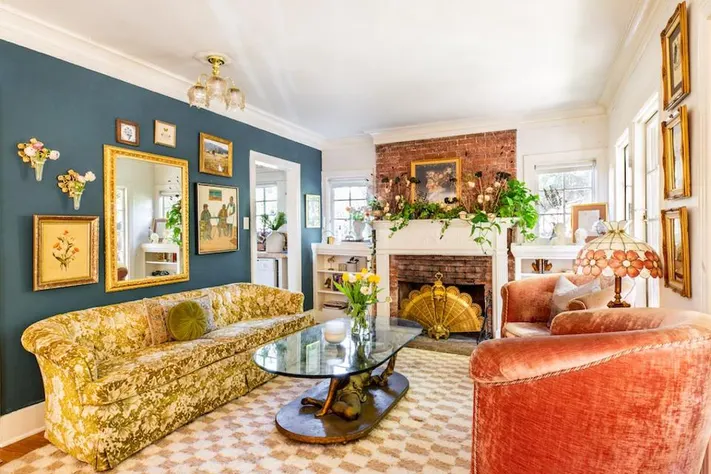
Maximalist cottagecore interior design is the charming lovechild of romantic nostalgia and cozy abundance. Rooted in the idyllic aesthetic of rural life, cottagecore typically embraces simplicity—but in its maximalist form, it blossoms into a richly layered, storytelling style that evokes the feeling of stepping into a lived-in country cottage overflowing with warmth, whimsy, and sentimental treasures. This look is all about comfort and emotional connection—every object, fabric, and flower contributes to a homey atmosphere steeped in history and heart.
In a maximalist cottagecore living area, floral wallpaper might be paired with lace curtains, gingham throws, and embroidered pillows—nothing is too soft, too quaint, or too ornate. Furniture leans toward the traditional: tufted armchairs, spindle-leg side tables, and vintage cabinets filled with ceramic tea sets and dried flowers. Colours are often gentle yet abundant—rosy pinks, sage greens, buttery yellows, and creamy whites form the base, with layers of botanical prints, faded tapestries, and hand-sewn quilts bringing the scene to life. It’s a space where every corner offers a vignette: a windowsill garden, a stack of old books, a cozy nook with a knitted afghan.
What elevates cottagecore into maximalism is the sheer amount of curated coziness. Instead of minimal touches, you get collections: dozens of candles in mismatched holders, an array of antique picture frames, a full gallery wall of vintage florals and family portraits. Handmade details—like embroidered tablecloths, crocheted doilies, and pressed flowers in frames—add authenticity and soul. The overall effect is enveloping and deeply nostalgic, like being wrapped in a memory. It’s not just a style—it’s a way of life that celebrates slowness, sentimentality, and the beauty of overgrown gardens and overfilled bookshelves.
Pop art powerhouse maximalist interior design is bold, brash, and unashamedly playful. It is all about the pop art movement of the 1950s and1960s
Pop art powerhouse

Pop art powerhouse maximalist interior design is bold, brash, and unashamedly playful. Rooted in the pop art movement of the 1950s and ‘60s—think Warhol, Lichtenstein, and vibrant consumer culture—it explodes with saturated colour, oversized graphics, and ironic nods to pop culture. This style turns a living space into an energetic visual playground, where neon signs, comic-strip murals, and statement furniture collide in an unapologetic celebration of excess and expression.
The pop art powerhouse aesthetic thrives on contrast and surprise. Walls might be painted bright pink or electric blue, adorned with retro movie posters, vinyl record covers, and bold typographic art. Furniture becomes sculpture—bubble chairs, geometric sofas, and acrylic tables in primary colours dominate the space. Patterns are loud and graphic: polka dots, checkerboards, and bold stripes. This style has a sense of humour, mixing kitschy objects like vintage soda signs or novelty lamps with sleek modern pieces for a layered, tongue-in-cheek effect.
In a maximalist pop art living area, more is more—but with a curated eye for impact. Layering is intentional: piles of colourful books, stacked art, and collectible figurines add texture and personality. Lighting is bold—lava lamps, LED strips, and oversized pendant lights act as focal points. What sets this style apart is its fearless individuality. It’s not trying to be “tasteful” in the traditional sense—it’s about joy, irreverence, and turning your space into a living canvas. Whether you’re channeling Andy Warhol or your inner Saturday morning cartoon, this aesthetic shouts, sparkles, and never sits still.