


Nestled in the picturesque Finger Lakes region of New York, the Mushroom House, officially known as the “Treehouse” or the “Funky House,” is a unique architectural wonder that stands out for its imaginative design. Designed by architect William H. Morrow in 1970, this unusual structure takes inspiration from nature, with its organic forms and whimsical appearance.
The Mushroom house is an architectural marvel in New York
The house, located in the village of Perinton, is often referred to as the “Mushroom House” due to its mushroom-like, bulbous shapes and curving, asymmetrical lines that make it look like something straight out of a fantasy world. The design seamlessly blends the building with the surrounding natural environment, creating a surreal yet harmonious relationship between architecture and nature.
The pods are supported by sculptural, slender columns, which give the house a light, elevated feel, as if it’s floating above the ground
The Mushroom House’s most distinctive feature is its iconic, curvaceous roofline. The structure is composed of multiple round, mushroom-shaped pods that are interconnected, each serving a specific purpose within the home. These pods are supported by sculptural, slender columns, which give the house a light, elevated feel, as if it’s floating above the ground. The varying sizes and heights of the pods create a dynamic, flowing form that contrasts with the straight, rigid lines typically found in modern architecture. This freeform design evokes the natural world, where irregular shapes and organic growth patterns are the norm. The use of concrete and other materials with rounded, smooth finishes further enhances the house’s organic aesthetic.

The pods are supported by sculptural, slender columns, which give the house a light, elevated feel, as if it’s floating above the ground
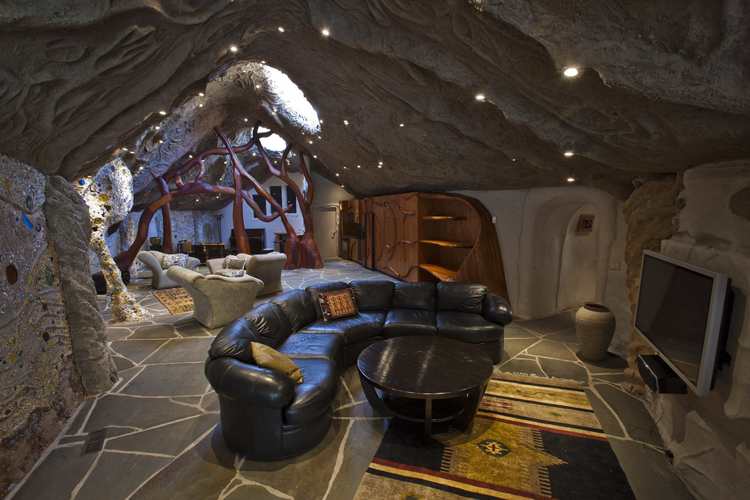
Inside, the Mushroom House continues its whimsical theme, with each pod serving as a distinct room or area. The interior spaces are designed to be open and fluid, with sweeping curves that flow from one room to the next. The round walls and ceilings give the interior an almost cavernous feel, creating a sense of spaciousness and openness. The organic design extends to the furniture and fixtures, which were custom-designed to fit the unique shape of the house. This ensures that every element, from the curved countertops to the circular windows, complements the overall aesthetic. The open layout maximises the flow of natural light, creating a bright and airy atmosphere throughout the home.

Inside, the Mushroom House continues its whimsical theme, with each pod serving as a distinct room or area
The house’s design also reflects a deep respect for its natural surroundings. Large, circular windows are strategically placed to offer panoramic views of the surrounding woodland and hillside, bringing the outdoors in and creating a sense of unity between the house and nature. The building is also nestled into the landscape in such a way that it appears to grow from the earth, further enhancing the feeling of integration with the environment. The natural stone foundation and the earthy tones of the exterior help the house blend seamlessly with the surrounding landscape, making it look like a natural extension of the forest rather than a man-made structure.

The Mushroom House was designed to be an open living house in the 1970s, before it was a popular design
The Mushroom House stands as a testament to the creativity and boldness of mid-century American architecture, embracing a departure from conventional design and experimenting with organic forms. While it may not have the clean lines and minimalist style of other modernist homes, the house captures the spirit of a more playful and free-spirited approach to design. Its iconic and surreal appearance has made it a beloved landmark in the Finger Lakes region, admired by visitors and architects alike for its daring and imaginative vision. In the Mushroom House, the boundaries of traditional architecture are pushed to new heights, proving that even the most unconventional designs can create a lasting and impactful presence in the built environment.

The kitchen is designed to open to a gas fireplace family room so you can keep the conversation going