


Beach coastal interior design brings the fresh, airy vibes of the beach into your home, creating a serene and relaxed atmosphere. Inspired by the colours, textures, and natural elements of the coast, this style combines light, soothing hues, and casual furnishings with a touch of coastal charm.
By embracing natural textures, light colours, and relaxed furniture, you can create a coastal-inspired home that feels like a tranquil beach retreat. Whether you’re inspired by the ocean or simply want a fresh, calming aesthetic, the principles of beach coastal interior design can be tailored to fit any space. With the right blend of colour, materials, and accents, your home can exude the charm and serenity of the seaside.
Whether you live near the water or simply want to evoke a coastal feel in your home, beach coastal design is a perfect way to create a relaxing space that mirrors the natural beauty of the seaside.
A key feature of beach coastal design is the use of light, airy colours that evoke the tranquillity and freshness of the beach
Embrace light, airy colours

A key feature of beach coastal design is the use of light, airy colours that evoke the tranquillity and freshness of the beach. Shades of white, soft neutrals, light blues, and seafoam greens are all common choices for walls, furniture, and accessories. These hues not only mimic the colours of the sand, sea, and sky but also help create a sense of calm and openness in your space. Lighter colours reflect natural light, making smaller spaces feel bigger and more inviting.
To balance out the soft colour palette, you can incorporate various textures and materials in complementary shades. For example, a soft grey sofa paired with cream cushions can create a serene, sophisticated look, while light blue accents in the form of throws or artwork can add subtle pops of colour. These gentle tones help create a peaceful atmosphere that’s perfect for unwinding after a long day.
Tip: If you want to add depth to your coastal colour scheme, consider using shades of sandy beige or driftwood grey for wooden furniture or flooring. This will add warmth to the space while still maintaining the light, beachy feel.
Coastal interiors are all about incorporating natural materials and textures that echo the elements of the beach – raw woods, woven jute, wicker, rattan
Natural materials and textures
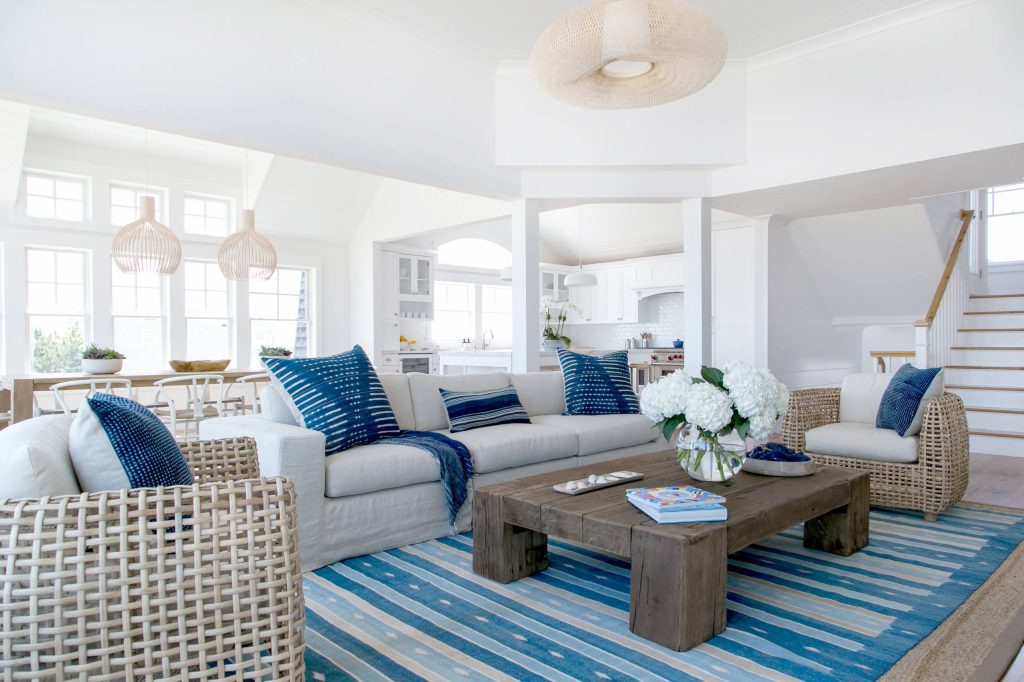
Coastal interiors are all about incorporating natural materials and textures that echo the elements of the beach. Think raw woods, woven jute, wicker, and rattan – materials that connect your home to the earth and sea. A wooden coffee table, wicker baskets for storage, or a rattan chair can instantly bring the natural beauty of the coast indoors. These materials create a relaxed, rustic feel that’s key to coastal design, allowing you to enjoy the natural world even when you’re not by the beach.
Textures play a big role in achieving the coastal look. Soft linen or cotton fabrics for sofas and cushions evoke the breeziness of the ocean, while jute rugs or sisal mats provide tactile interest underfoot. Layering different textures, such as a linen sofa with a woven basket and a jute rug, creates a comfortable and welcoming space that feels casual yet curated. Combining soft textiles with harder materials like wood or stone brings balance and visual interest.
Tip: Don’t be afraid to mix natural materials. Pairing wood with woven textiles or glass with stone creates an inviting, layered effect. The key is to keep things light and relaxed without feeling too heavy or formal.
Incorporating coastal colours in accessories

In a beach coastal interior, accessories are the perfect way to introduce coastal colours and themes without overwhelming the space. Think nautical-inspired pieces like seashells, driftwood sculptures, or coastal artwork. Soft blue or green glass vases can mimic the hues of the ocean, while woven baskets add texture and warmth. Incorporating these natural, beach-inspired accessories adds a personal touch while reinforcing the coastal theme.
Cushions, throws, and rugs are excellent ways to inject more coastal colours into your living room or bedroom. A set of soft, striped cushions in shades of blue and white can evoke the feeling of seaside cottages, while an ocean-inspired print on a rug or curtains can bring the outside in. The key is to choose accessories that reflect the calming, relaxed nature of the coast – simple, minimalistic pieces that remind you of the sea and sky.
Tip: When selecting coastal accessories, think about the natural elements of the beach – the sand, the water, and the sky. Incorporating these three elements through colour and texture can help you create a balanced and harmonious design.
Furniture in a coastal home should reflect the relaxed, easy-going nature of beach life. Opt for comfortable, casual pieces that invite lounging and leisure
Furniture with a casual, laid-back vibe

Furniture in a coastal home should reflect the relaxed, easy-going nature of beach life. Opt for comfortable, casual pieces that invite lounging and leisure. Sofas with soft slipcovers, light wood furniture, and relaxed armchairs are great choices for a beach-inspired living room. You want to create a space that feels easy to unwind in, with furniture that doesn’t look too polished or formal.
Natural materials like driftwood or reclaimed wood can be used for furniture pieces like coffee tables, side tables, or shelving. These materials not only enhance the coastal vibe but also bring a sense of history and character to the space. Furniture should be functional and comfortable, with soft, plush cushions and ample seating for social gatherings or quiet moments.
Tip: If you’re working with limited space, look for multi-functional pieces that combine both style and practicality, such as storage ottomans, coffee tables with hidden compartments, or a daybed that doubles as a guest bed.
An open and airy layout is a hallmark of coastal design. This creates a space that flows seamlessly from one room to another
Open, airy layout

An open and airy layout is a hallmark of coastal design. This creates a space that flows seamlessly from one room to another, reflecting the expansiveness and freedom of the beach. Large windows and open spaces allow natural light to pour in, filling the room with warmth and brightness. The idea is to create a sense of openness, where everything feels light and free.
When designing an open coastal space, aim for a minimalistic approach that prioritises clean lines and a clutter-free environment. The focus should be on creating a sense of flow and tranquillity. Remove any unnecessary furniture or accessories that could make the space feel cramped, and keep the layout open and uncluttered. A well-organised space with functional, stylish pieces will help maintain that relaxed beach feel.
Tip: Consider incorporating sliding doors or large windows that open to an outdoor patio or balcony, blending the indoor and outdoor areas. This creates a sense of continuity, much like the unbroken line between land and sea.
Lighting is crucial in a beach coastal interior, as it helps set the mood and complements the light, airy vibe
Light fixtures with a beachy feel

Lighting is crucial in a beach coastal interior, as it helps set the mood and complements the light, airy vibe. Choose fixtures that reflect natural materials or simple, nautical-inspired designs. Pendant lights with woven rattan shades, for example, bring texture and warmth to the space, while table lamps with glass or ceramic bases can evoke the colours of the ocean. Soft, warm lighting creates a welcoming atmosphere, especially in the evenings.
A chandelier made from driftwood or a cluster of glass pendants can also add a touch of coastal elegance. When selecting lighting, think about creating layers – overhead lighting for general illumination, task lighting for reading or cooking, and accent lighting to highlight architectural features or artwork.
Tip: Don’t forget about natural light. Large windows, glass doors, or skylights are essential in creating a bright and open environment. Maximising daylight is an easy way to make any space feel airy and fresh, just like a coastal home.
Plants such as palms, succulents, or fiddle leaf figs can add lush greenery and texture to your living space
Indoor plants and greenery

Indoor plants are a wonderful way to bring a touch of nature into your coastal home. Plants such as palms, succulents, or fiddle leaf figs can add lush greenery and texture to your living space. They also help to purify the air, making your home feel fresher and more alive. Consider placing plants in natural wicker baskets, ceramic pots, or wooden planters to keep with the coastal aesthetic.
In addition to adding visual appeal, plants also create a sense of calm and relaxation. The natural colours and textures of plants provide a beautiful contrast to the soft blues and whites of the coastal palette. They can be placed strategically around the room, on windowsills, or even hanging from the ceiling to create a more tropical, beachy atmosphere.
Tip: If you don’t have a green thumb, opt for low-maintenance plants like succulents or cacti. These plants are ideal for coastal design and require little care, making them perfect for busy homes.
Think about incorporating art that depicts the sea, boats, or beach scenes, whether through paintings, prints or photographs
Nautical accents and artwork

To give your coastal interior an authentic beach vibe, nautical accents and artwork are a must. Think about incorporating art that depicts the sea, boats, or beach scenes, whether through paintings, prints, or photographs. A large ocean-themed canvas on the wall or framed seashell prints can help transport your space to the coast, giving it a serene, calming vibe.
Nautical elements like ship wheels, anchors, or lantern-style lighting also work well in coastal interiors, but it’s important not to overdo it. Use these accents sparingly, as they can easily overwhelm the space if too many are added. Instead, think of them as small touches that enhance the overall beach theme without making it feel too literal.
Tip: For a more subtle nautical theme, consider using a colour palette inspired by the sea – soft blues, sandy neutrals, and whites – rather than going for obvious nautical decorations.